Cafetière (French Press)
Full-immersion brewer with a metal mesh plunger.
Simple, brews for several people at once, and produces a fuller-bodied cup.
A cafetière and a French press are the same device — cafetière is simply the usual British name for it.
A cafetière brews by full immersion: coffee and water sit together for several minutes, then a metal mesh plunger separates them. Nothing to plug in, nothing to master.
Because the mesh lets oils and fine particles through, the result is a heavier-bodied cup than paper-filtered coffee.
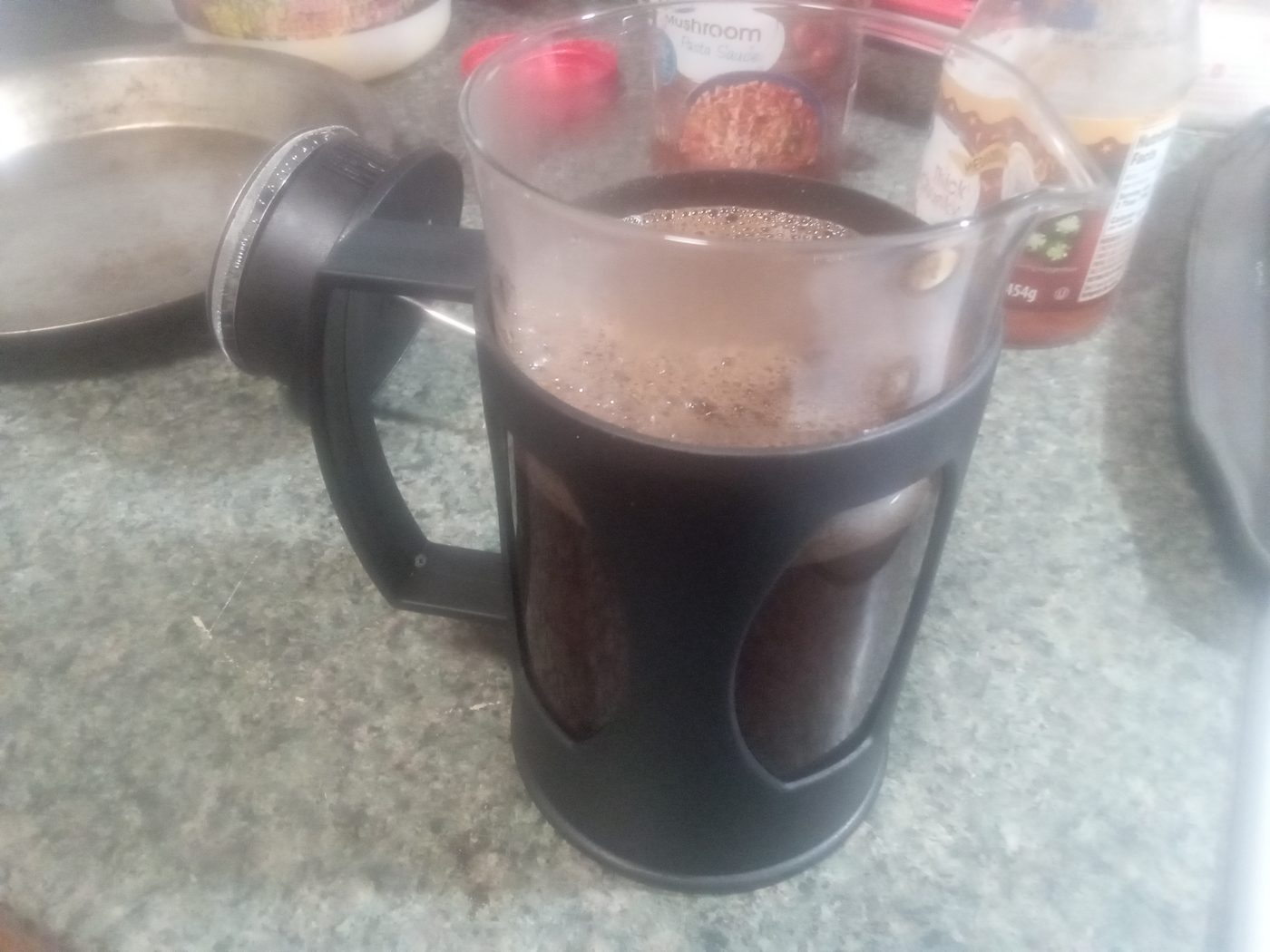
Swill hot water around the glass jug and tip it out. A cold jug drops the brew temperature straight away.
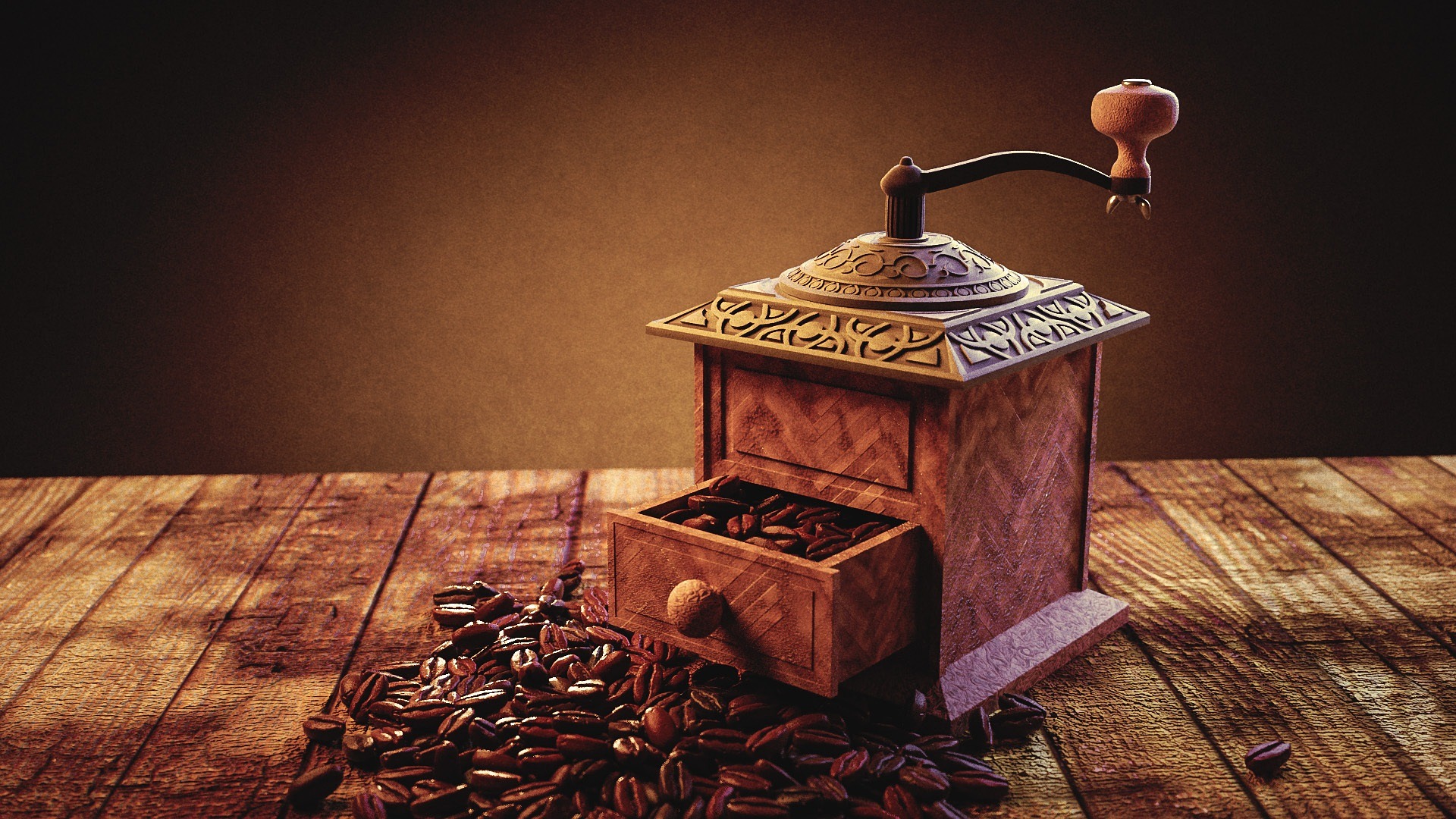
Grind to the texture of coarse sea salt. As a starting point use 60 g of coffee per litre of water (about 15 g of coffee to 250 ml) — the ratio range published by the Specialty Coffee Association for filter coffee — then adjust to taste. A 3-cup (350 ml) cafetière takes about 21 g; an 8-cup (1 litre) takes about 60 g.
Boil the kettle and let it stand for about 30 seconds (roughly 93–96C). Pour in all the water at once, wetting every bit of the grounds.
A crust of grounds forms on the surface. Break it with a spoon at about one minute and give it a gentle stir; most of the floating grounds will sink.
Put the lid on with the plunger raised and leave it for a total of about four minutes. Longer steeps taste heavier and more bitter.
Press the plunger down steadily over 15–20 seconds. If it fights you, your grind is too fine; if it drops with no resistance, it is too coarse.
Pour the whole jug out immediately. Coffee left sitting on the grounds keeps extracting and turns bitter.
| Cafetière size | Water | Coffee (standard) | Coffee (stronger) |
|---|---|---|---|
| 3-cup | 350 ml | 21 g | 25 g |
| 4-cup | 500 ml | 30 g | 35 g |
| 6-cup | 750 ml | 45 g | 53 g |
| 8-cup | 1 litre | 60 g | 70 g |
| 12-cup | 1.5 litres | 90 g | 105 g |
Cafetière coffee ratio by jug size, using 60 g of coffee per litre of water (the Specialty Coffee Association filter ratio) and a stronger 70 g per litre for a fuller cup. "Cup" sizes are the manufacturers' own markings, not mug-sized servings.
As an Amazon Associate I earn from qualifying purchases. Read our affiliate disclosure.
Full-immersion brewer with a metal mesh plunger.
Simple, brews for several people at once, and produces a fuller-bodied cup.
Manual burr grinder with stainless steel conical burrs.
A widely recommended entry-level hand grinder: consistent grind for filter coffee at a modest cost.
Digital scale with 0.1 g precision and an integrated brew timer.
Lets you follow roaster recipes exactly and repeat a great cup.
See the full list on our coffee gear page, and buy beans direct from UK specialty roasters.