Hario V60 Dripper
The classic cone-shaped pour-over dripper from Japan, in ceramic or plastic.
The standard pour-over brewer in specialty coffee; cheap, and most roasters publish V60 recipes.
Pour-over means pouring hot water over ground coffee in a filter by hand, in stages, so you control the rate and where the water lands. It is the method most UK specialty roasters have in mind when they publish a brew recipe.
Paper filters trap oils and fines, so the cup is clean and highlights acidity and aroma — which is exactly what light-roasted specialty coffee is roasted for.
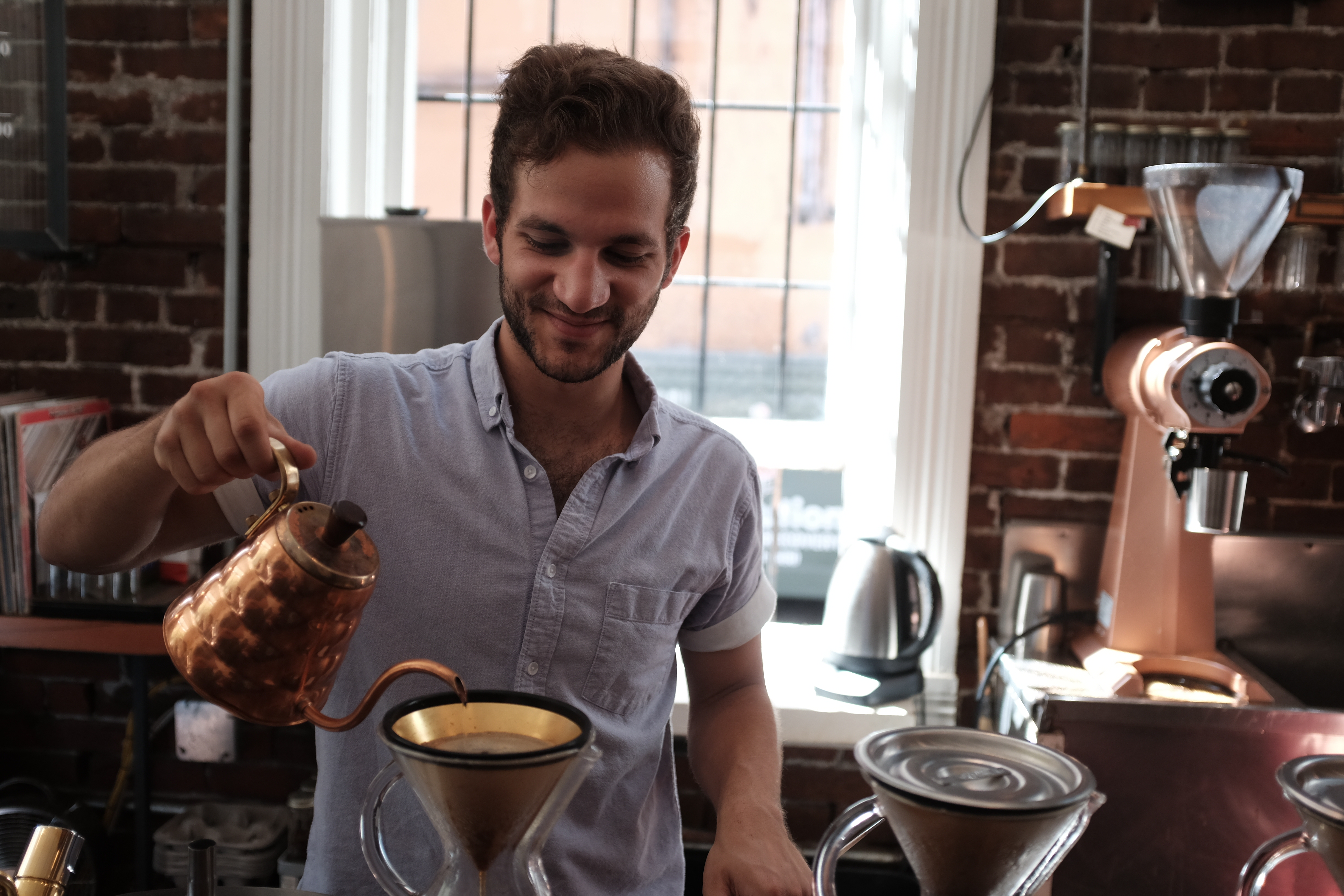
Put the paper in the dripper and pour hot water through it into the vessel below. Discard that water. This rinses out paper taste and warms the dripper and jug.
As a starting point use 60 g of coffee per litre of water (about 15 g of coffee to 250 ml) — the ratio range published by the Specialty Coffee Association for filter coffee — then adjust to taste. A standard single brew is 15 g of coffee to 250 g of water. Level the bed and make a small dip in the centre.
Start the timer and pour about twice the coffee weight in water (30 g for a 15 g dose). Wet all the grounds, give a gentle swirl, and wait 30–45 seconds while the coffee degasses.
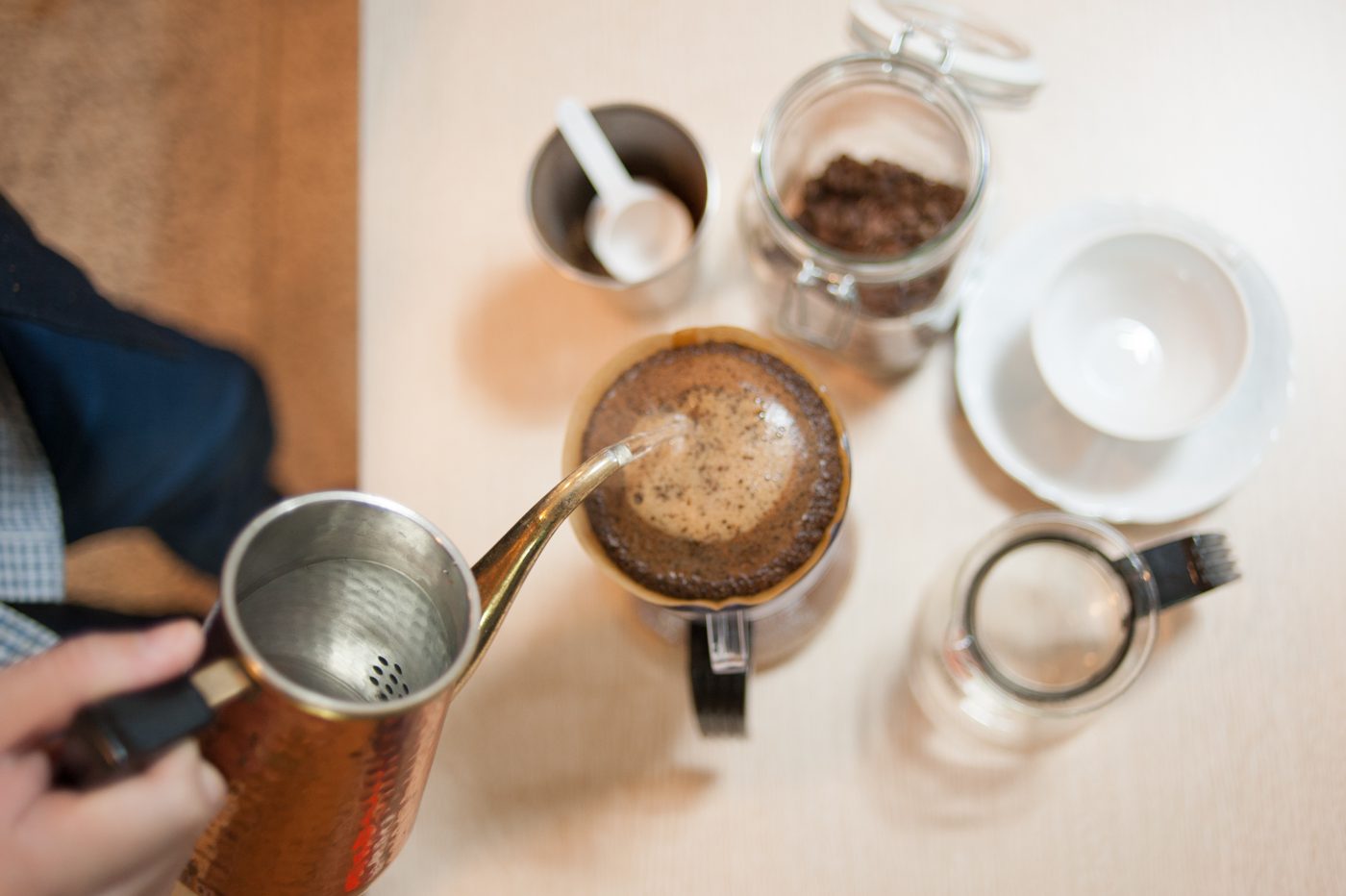
Pour in two or three even stages, spiralling from the centre outwards and stopping short of the paper. Keep the water level roughly halfway up the cone rather than letting it flood.
All the water should be in by around 2:00 for a single cup. Give the dripper a small swirl at the end to settle the bed flat.
The last of the water should drain by 2:30–3:30. Remove the dripper, swirl the jug and pour. Taste it while it cools — flavours open up as the temperature drops.
Draining too fast and tasting sour or thin? Grind finer. Very slow and tasting bitter or drying? Grind coarser. Change one thing at a time.
As an Amazon Associate I earn from qualifying purchases. Read our affiliate disclosure.
The classic cone-shaped pour-over dripper from Japan, in ceramic or plastic.
The standard pour-over brewer in specialty coffee; cheap, and most roasters publish V60 recipes.
Electric gooseneck kettle with variable temperature control.
Precise temperature control and a counterbalanced handle; a favourite among specialty brewers.
Digital scale with 0.1 g precision and an integrated brew timer.
Lets you follow roaster recipes exactly and repeat a great cup.
Bleached (white) paper filters sized for V60 drippers.
The correct papers for the V60; white papers carry less paper taste than brown.
See the full list on our coffee gear page, and buy beans direct from UK specialty roasters.